
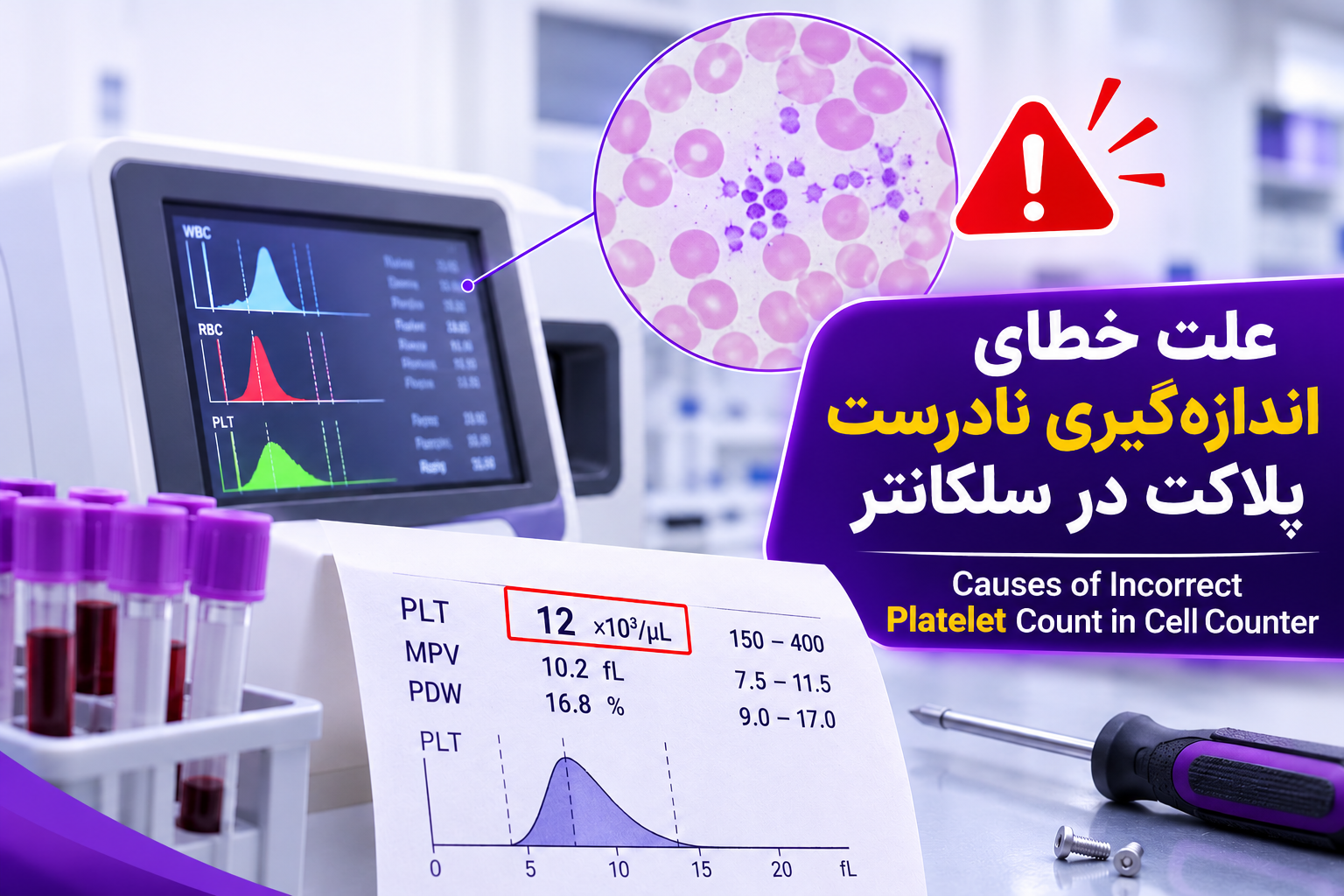
A platelet result can look surprisingly low or high. One possibility is a real change. Another is that something about the specimen or the way the analyzer counts particles has affected the number. The laboratory brings several pieces of evidence together before deciding what to report. These can include the condition of the specimen, the exact instrument message, past results if available and any further review called for by the laboratory's procedure. This guide explains the checks and what each one can tell the reviewer. [1, 2]
What is the device trying to count?
Platelets are small elements in the blood that help form clots. An analyzer measures events in a blood specimen and uses their properties to decide which ones belong in the platelet count. Individual platelets normally have properties the instrument can recognize with its counting method. When platelets stick to each other, or other particles resemble an individual platelet to the device, the observer needs more information to understand the result. [1]
A useful comparison is a machine that sorts individual beads. If several beads stick together, they can pass as one different-sized object. If pieces from another material are about the right size, they can also be placed in the wrong group. The comparison helps explain two possible errors in the same instrument. It does not indicate whether either of them occurred in a particular blood sample. For that, the lab reviews the actual specimen, the method and the findings.
Check how the specimen arrived
The team can check whether the specimen matches the request, when it was collected and whether there is evidence of clotting or another specimen problem. That information can be valuable alongside the result and the analyzer's display. An unsuitable specimen may need a different response from a specimen with a flag and no visible issue. The person reviewing it follows the laboratory's criteria for acceptance and escalation. [1, 2]
Platelets can clump in some specimens collected with EDTA, an anticoagulant commonly used for blood counts. The instrument may miss clumped platelets or group some clumps with other events. In that case the displayed count can be lower than the result the lab would obtain from suitable material without that interference. A microscopic review and other steps under the local procedure can supply evidence about what happened. Merely repeating the number does not establish the cause. [1, 2]
The counting method affects what can interfere
Impedance counting uses a change in an electrical signal as a particle passes through a sensing point. The change is related to particle volume. Very large platelets can fall outside the expected group. Fragments of red cells or other small particles can overlap the platelet region. The appearance of the histogram, a graph summarizing the measured distribution, can be one clue that something different is reaching the instrument. [1]
Some analyzers can measure platelets with an optical or fluorescent method. Those methods use different measured properties. They can help the laboratory distinguish events in some circumstances. Ask the technical lead which options are actually available and which is appropriate under the laboratory's procedure for a given finding. The team still weighs the condition of the specimen and any limitations of the alternative channel. [1]
Example 1 — a low count accompanied by a clump flag
Imagine an operator who sees an unexpectedly low result and a platelet-clump flag. A recent result was higher. The operator records the exact instrument message and looks at the specimen according to the laboratory's procedure. That recent result helps explain why the report deserves attention. It cannot by itself determine whether the new value reflects a real change. If smear review is required, the person reviewing the slide can record whether aggregates are present. [1, 2]
At this point the laboratory should be able to say what it knows from each step. For example, the analyzer raised a clump flag, the review observed aggregates, and the designated reviewer will decide how the count can be confirmed or reported under the local procedure. If the lab needs a replacement specimen or another approved method, it can tell the requesting team what is pending. The outgoing shift leaves enough information for the next shift to follow up without treating the initial value as a finalized report. [2]
Example 2 — a high count with an unusual distribution
Suppose a different sample produces a high count and a histogram that looks different from those staff usually see on that channel. The operator records both observations and checks the available specimen information. Small particles that overlap the platelet region can raise an impedance count in some situations. The chart alone does not identify those particles. The reviewer may need a microscope review or another step allowed by the lab procedure to work out what can be reported. [1]
This case can be a useful exercise during staff training. Have the operator write two short notes, one saying what was observed and the other saying which approved check is next. For example, the first note might say that the count and the histogram both triggered the local review procedure. The second note might identify the reviewer and the planned check. The notes keep the observed evidence clear and help the next person avoid repeating work or guessing at a cause.
Keep the review traceable from the bench to the final report
Write down the instrument and counting channel, the specimen finding, the relevant flag, the step taken and who made the reporting decision. Include any reporting comment required under the laboratory's policy. If the count cannot yet be released, keep the reason and the next step visible to the person who will continue the case. That may be particularly important when several requests move through the lab during a shift change. [2]
Once the case is complete, the record can answer practical questions. Did a reviewer examine the original distribution? Was there evidence of clumping or another specimen issue? Did an alternative result replace the initial measurement under the approved process? Does the requesting team know if a value was held or a new specimen was needed? Those questions are useful even when the actual decision differs from the examples here.
Ask what your analyzer and reporting software can show
If you are considering a cell counter, ask for a routine example and an example with a platelet flag from the version you are buying. Ask what the graph shows, which message appears to staff and what the laboratory information system, or LIS, receives. Some details may remain on the device. Work out where the reviewer can find them and how the laboratory would record the outcome of the approved check.
- Ask which platelet measurement channels are present on the offered configuration.
- Have the supplier show an example of the original message and histogram.
- Check which information reaches the LIS and who can open the details on the device.
- Run a test handover with approved example data and check whether the second shift can see the pending action.
- Agree who updates the laboratory procedure and who trains staff on the final workflow.
For a review of the current service, sample a few completed records and follow one from the original instrument message to the final laboratory decision. If the link between them is unclear, decide which part needs a better note or a clearer display. The goal is for the next trained person to see the evidence and the outcome without having to infer what another colleague did.
In a monthly review, look at each stage separately. Count which cases reached the reviewer because of a flag and which came from a specimen observation or a previous result. If several cases got stuck at the same handoff, ask what information the new reviewer lacked. Change the record or training for that step, then check a few later cases to see whether the handoff is clearer.
References
- شمارش پلاکت
- خطای پلاکت
- ترومبوسیتوپنی کاذب
- تجمع پلاکتی
- دستگاه هماتولوژی
- platelet count error
- pseudothrombocytopenia
- EDTA clumping