
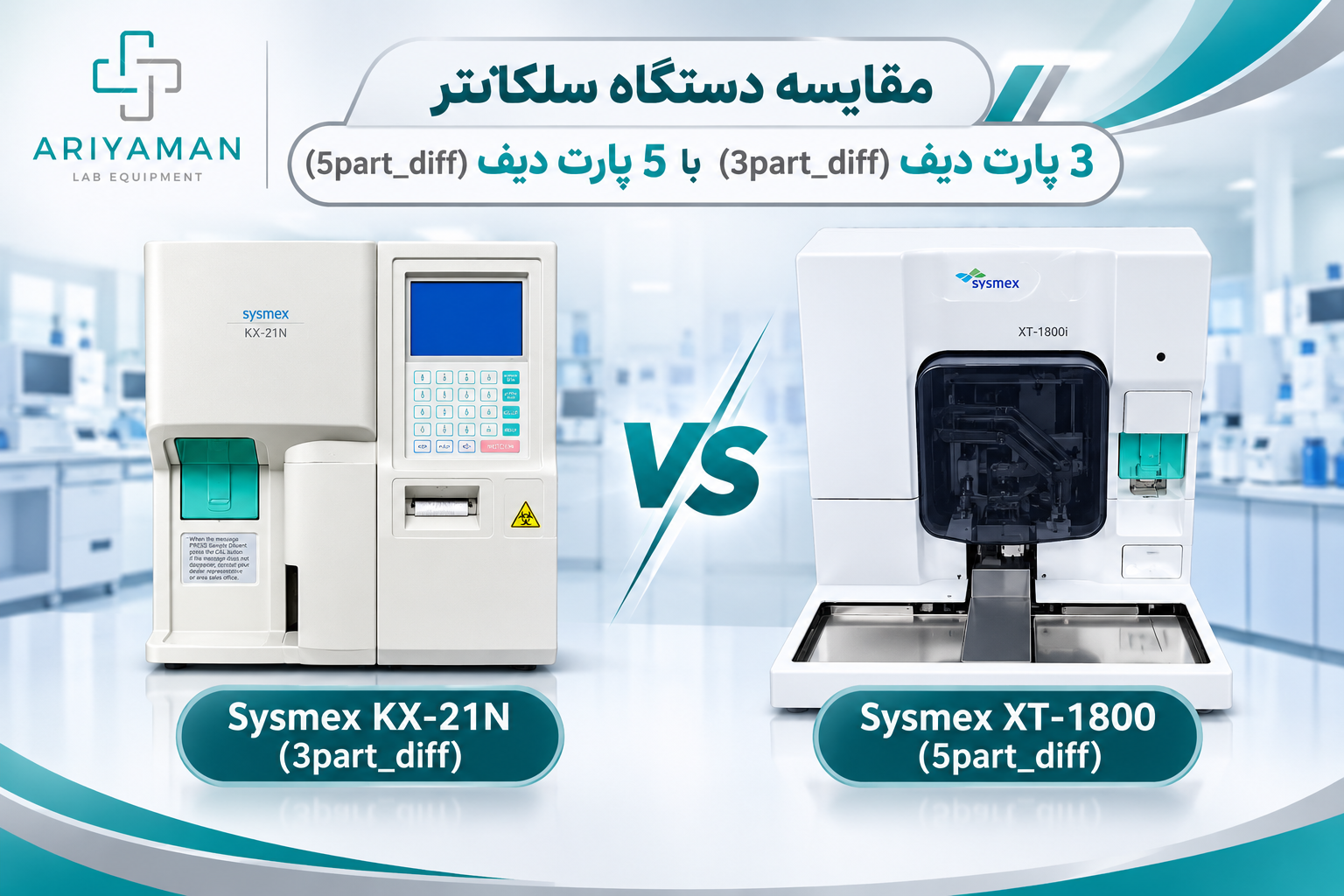
If you are shopping for a cell counter, “three-part” and “five-part” will turn up in most comparisons. The difference is how the instrument reports white blood cells. A three-part differential groups those cells into three categories. A five-part differential usually gives separate rows for five main types. To judge which is right for your lab, put an example report next to your own worklist. Look at the information your staff need, what happens after a flag, and where the reporting process slows down. [1, 2]
Start with the difference between a CBC and a differential
A CBC is a complete blood count. Its report usually includes information about red cells, hemoglobin, platelets, and the overall white blood cell count. A white cell differential addresses a further question. It shows how the white cells are distributed among the groups the instrument reports. Think of the overall count as the number of people in a classroom. The differential is more like a list that distributes those people among several stated groups.
When a seller calls a device five-part, the term refers to that grouping. Ask separately for a sample report and a full parameter list to see what else the device supplies. Your laboratory may need to see both numbers and percentages or retrieve a previous graph when reviewing a result. The name of the differential alone tells you little about which displays are included in the supplied software or which data reach your laboratory information system. [1, 2]
What does a typical three-part report look like?
Many three-part instruments show labels such as lymphocytes, a middle or mixed group, and granulocytes. The labels and their definitions depend on the manufacturer. If you see a mixed group, use the manufacturer's explanation of what is included on that instrument. A single mixed group does not produce the same information as a separate count for each cell type in the group. The Sysmex XP series is an example of a three-part hematology line. [1]
Ask the supplier for a blank report or an example without patient information. Check the actual labels. Review them with your laboratory's technical lead and decide whether that report supplies what you currently need. If some work will still need a separate method, budget the time for it. For work you plan to refer out, record the number of referrals, the collection schedule and the expected time until a result. Those observations give you a way to compare the effect of a different instrument.
What does a five-part report show separately?
A five-part differential usually reports neutrophils, lymphocytes, monocytes, eosinophils and basophils in separate groups. The list can sound complicated at first. Looking at one actual report makes it easier to see how the groups appear. For example, the Sysmex XS documentation describes the five-part differentiation on that family. If your laboratory needs those rows in routine work or to support staff review, ask the supplier to show all of them in the report for the software version being offered. [2]
Ask whether the report shows both an absolute count and a percentage for each group. The percentage tells you the group's share of the total number of white cells. The absolute count gives the amount for the group itself. See how the names, values, units, and any related flags look on the instrument. If your staff work mainly from the laboratory information system, ask to open the result in that system too. It is useful to see whether the staff receive the fields they need in the place where they actually review them.
What happens when the instrument flags a result?
A flag draws the operator's attention to something in the measurement or its pattern. The next step depends on the exact message, the sample and your laboratory's approved review procedure. The laboratory may need to review some results further. During the supplier demonstration, ask to see where the original message appears, which part reaches the reporting software, and where the operator can note what is still pending if the case goes to the next shift.
Imagine a busy hour when three results with flags arrive in the review queue. The analyzer may already have finished counting the specimens, but an authorized result is not ready until the designated person has finished reviewing it. Include this time when you compare capacity. Ask the supplier to show a routine result and an example with a flag using approved test data. The demonstration can help you identify where staff will spend their time and what needs to be handed over.
How do the needs of a small center and a busy lab differ?
Consider a small center with a modest number of daily CBC requests. Most use the routine report and a regular courier takes selected work to another laboratory. The manager can measure how many cases are referred in a week and how long it takes to receive the report. They can then ask whether adding separate groups on site would make a useful difference, or whether space, reagent waste, support and familiar review steps have a larger effect on their work.
Now imagine a larger lab that receives samples from several departments together. During its busiest hour, different requests are queued and some results need to move through review quickly. This lab can count how often it needs individual white-cell groups and how much review happens in a normal shift. It can also check who is available to handle flags when staff are limited. Two laboratories with similar daily sample counts may need different equipment because the mix of requests, arrival times and review resources are different.
Put running costs and support beside the report comparison
The purchase is a one-time cost. Reagents, controls and service continue throughout the instrument's use. Ask each supplier to list the materials required, the approximate usable volume of each pack and how long an opened pack can be used. For a low-volume laboratory, unused material that expires can raise the cost per report. For a laboratory that operates two shifts, the local stock of supplies and time to get a replacement may have a bigger practical effect. Ask for figures tied to the unit being quoted.
Find out who takes a service call, how the supplier responds and which parts are covered in the agreement. If the laboratory has a single instrument, agree which samples will go to a backup and who will inform the requesting team during a stop. Include the staff members who actually review and release results in the training plan. Have them practice routine handling and a flagged handoff so they know what they will be responsible for after go-live.
Use a simple worksheet to compare two offers
Make a column for each instrument. Start with the model, software version, and the options included in the quote. Attach one routine report, an example with a flag, and the list of fields transmitted to the lab system. Give the same approved test scenarios to both suppliers. Have them show how the operator registers the sample, retrieves a result and passes any open review question to the person who needs to act on it.
- Count the normal requests and the cases needing more detail during a representative week.
- Read the group names, counts or percentages, units and flags on both instruments.
- Record when the first result appears and when it can be authorized.
- Compare the cost of packs, controls, training, service and a possible backup.
- Assign a person and due date to each question the demonstration leaves open.
Ask the technical lead to finish with one sentence about what each model would change in your laboratory. One candidate might reduce referrals on a defined number of requests. Another may fit the current work because the team can get supplies reliably and the report matches established responsibilities. That sentence makes it much easier to remember why an option fits when you are looking at several quotes and a long list of specifications.
References
- سل کانتر
- ۳ پارت دیف
- ۵ پارت دیف
- دستگاه هماتولوژی
- تفاوت سل کانتر
- hematology analyzer
- 3-part differential
- 5-part differential